
Share
China Customs Launches AI-Powered 'Smart Inspection System' for ICT Export Compliance: Key Impacts and Industry Responses

Introduction
On March 1, 2026, China Customs officially launched the AI-driven 'Smart Inspection System' (智检通) in Shenzhen, Suzhou, and Chengdu—three major ICT export hubs. The system leverages NLP and knowledge graph technologies to automate HS code classification (e.g., subcategory misjudgments under HS 8471), origin certificate verification, and export license alerts for computers, servers, and storage devices. This development is critical for ICT exporters, logistics providers, and ERP vendors, as it reshapes compliance workflows and risk management in cross-border trade.
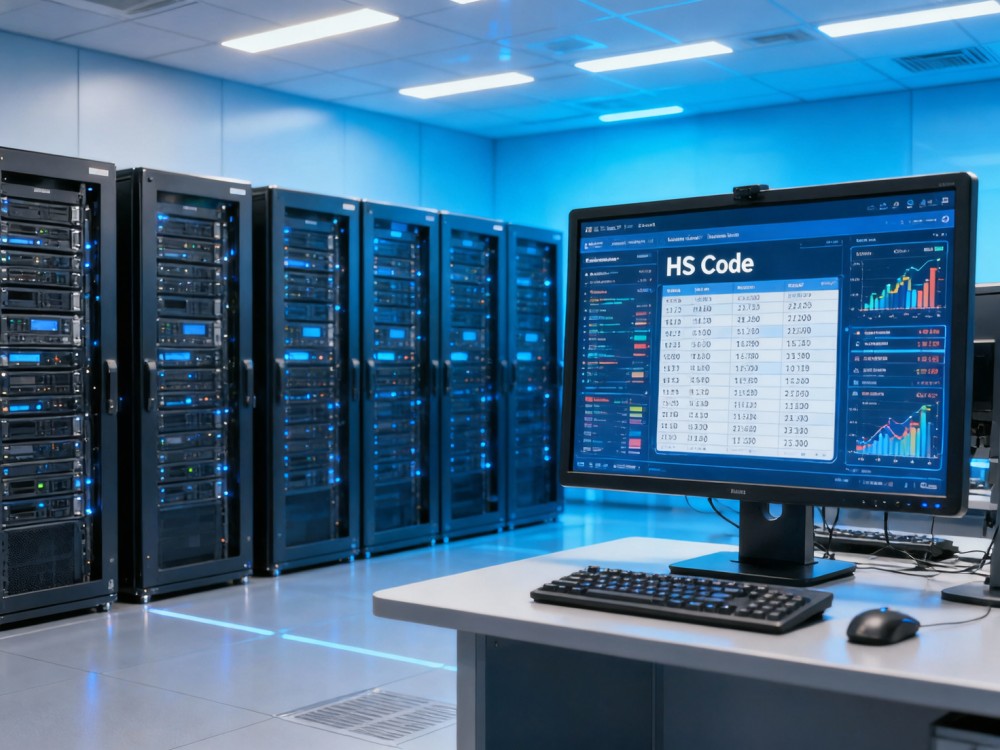
Event Overview
The pilot program targets ICT equipment exports, automating previously manual processes for HS code validation and regulatory checks. Key confirmed features include:
- Scope: Covers computers, servers, and storage devices
- Technology: NLP and knowledge graphs for real-time risk alerts
- Locations: Shenzhen, Suzhou, Chengdu (Phase 1)
- Requirement: Enterprises must pre-map HS codes in ERP/customs systems
Industries Affected
1. ICT Exporters (OEMs/ODMs)
Direct impact on manufacturers shipping finished products. The system may flag misclassified goods (e.g., servers mistaken for workstations under HS 8471), requiring immediate rectification to avoid delays.
2. Supply Chain Service Providers
Freight forwarders and customs brokers must adapt to AI-generated risk warnings, which could alter declaration workflows and client communication protocols.
3. ERP/Compliance Software Vendors
Demand for systems with built-in HS code mapping and compliance tagging will rise, especially for clients in pilot regions.
Actionable Insights for Businesses
1. Prioritize ERP-Customs System Integration
Ensure HS code granularity matches Customs’ AI training data. For example, differentiate between "storage controllers" (HS 8471.80) and "flash drives" (HS 8523.51).
2. Monitor Pilot Feedback
Track error rates in Shenzhen/Suzhou/Chengdu to anticipate nationwide rollout patterns. Early data may reveal common misclassification traps.
3. Pre-validate High-Risk Categories
For products with historically ambiguous classifications (e.g., AI servers vs. general-purpose servers), conduct internal audits before declaration.
Industry Observation
Analysis来看, this signals China’s shift toward AI-assisted trade governance. While promising faster clearance for compliant shipments, the system’s strict logic may initially increase rejection rates for borderline cases. 当前更值得关注的是 how Customs refines the AI’s decision boundaries during the pilot—whether it leans toward conservative (more alerts) or pragmatic (contextual approvals) enforcement.
Conclusion
The 'Smart Inspection System' represents a structural change in export compliance, where algorithmic precision replaces human discretion. Enterprises should treat this as a catalyst to upgrade digital trade infrastructure rather than a one-off compliance hurdle. The pilot phase offers a critical window to align internal systems with Customs’ evolving AI standards.
Sources
- China Customs Official Announcement (March 1, 2026)
- Note: System performance metrics (e.g., accuracy rates) await official release post-pilot.
Export Updates Desk
Related News
- 00
0000-00
Which printing industry regulations affect packaging exports? - 00
0000-00
Vietnam to Require MOIT Energy Labels for Office Supplies - 00
0000-00
RCEP Rule Adjustment Delays Zero Tariff for China Smart Boards - 00
0000-00
China’s Zero-Tariff Move Reshapes Africa-Bound Exports - 00
0000-00
China Bans Procurement From 46 U.S. Firms
Weekly Insights
Stay ahead with our curated technology reports delivered every Monday.