
Share
What Consumer Electronics Policy Shifts Matter Most in 2026?

Consumer electronics businesses entering 2026 are dealing with a policy environment that is no longer limited to safety marks, import documentation, and warranty terms. The regulatory burden now follows a product across its full life cycle: design, sourcing, software support, repair, sale, data handling, battery replacement, recycling, and eventual disposal.
For manufacturers, retailers, distributors, procurement teams, and investors, the practical question is not simply whether a device can be sold. It is whether the product architecture, supplier evidence, service model, and commercial claims can withstand increasingly connected requirements across major markets.
That is why the biggest policy and regulations shifts for consumer electronics in 2026 matter well beyond compliance departments. They are likely to affect bill of materials decisions, product launch calendars, channel agreements, returns exposure, inventory planning, and the competitiveness of lower-cost devices.
Repairability is becoming a product-design issue, not a customer-service option
Right-to-repair rules are among the most consequential shifts because they change what manufacturers must make available after a device is sold. The broad direction is clear in several jurisdictions: consumers and independent repair providers are gaining stronger expectations, and in some cases legal rights, to access repair information, spare parts, tools, diagnostic functions, and reasonably priced repair pathways.
Europe remains a major driver. EU ecodesign and energy-labelling measures for product categories such as smartphones and tablets are expected to influence market practices from 2025 onward, with effects becoming more visible in 2026 product portfolios. Requirements can include provisions related to spare-part availability, repair access, battery endurance, resistance to accidental damage, and the presentation of product information. Exact obligations vary by product category and market, so businesses should verify the current legal text and implementation dates rather than relying on broad summaries.
In the United States, repair requirements remain more fragmented at the state level, but the commercial effect is broader than any individual state law. A manufacturer that builds separate repair processes for different markets creates operational complexity. Many companies will instead assess whether a more consistent repair policy is commercially and technically feasible.
The common misconception is that repairability only matters for premium phones, laptops, or large appliances. In reality, repair expectations may increasingly reach categories including wearables, smart home devices, personal audio products, gaming accessories, monitors, routers, and battery-powered household electronics. The applicable rules may differ, but buyers are starting to ask a similar question across categories: can this device be maintained, repaired, and supported for a credible period?
For B2B buyers, repairability should be evaluated as a service continuity issue. A low acquisition price can lose its advantage when a supplier cannot provide replacement batteries, charging ports, screens, adapters, or core boards within the useful life of a deployed fleet. This is particularly important for schools, offices, managed accommodation, retail chains, and service organizations that purchase hundreds or thousands of endpoints.
- Ask how long critical spare parts will remain available after the last unit is placed on the market.
- Confirm whether repair manuals and diagnostics are restricted to authorized partners.
- Separate cosmetic part availability from functional component availability.
- Check whether software pairing, firmware locks, or parts authentication can limit independent repair.
- Assess repair turnaround time by region, not just the existence of a repair program.
Battery rules are moving from shipping compliance to lifecycle accountability
Lithium-ion batteries remain central to consumer electronics regulation because they combine safety, transport, sourcing, durability, and waste-management concerns. In 2026, the most material change for many organizations will be the transition from treating batteries as replaceable components to treating them as regulated lifecycle assets.
The EU Battery Regulation is a prominent example. Its obligations are phased in over multiple years, and not every requirement will apply to every product at the same time. However, it establishes a direction of travel that global electronics suppliers cannot ignore: stronger due diligence, more structured information, collection and recycling responsibilities, performance expectations, and eventually more detailed battery data requirements for relevant products. Certain digital battery information requirements are scheduled to develop over time; specific product scope and dates should be checked against current guidance.【待核实】
For product teams, the immediate operational questions are simpler and more urgent. Can the battery be removed or replaced without disproportionate damage? Is the battery specification stable enough to support multi-year service? Is the cell supplier able to provide traceable test, material, and transport documentation? Are battery labels, packaging, and take-back arrangements aligned with every destination market?
Battery regulations are also exposing a gap between marketing language and operational reality. Claims such as “long-lasting,” “all-day,” or “high durability” can become risky when they are not supported by defensible usage assumptions, battery-cycle data, and warranty treatment. Procurement teams should request evidence rather than treating advertised runtime as a comparable technical metric.
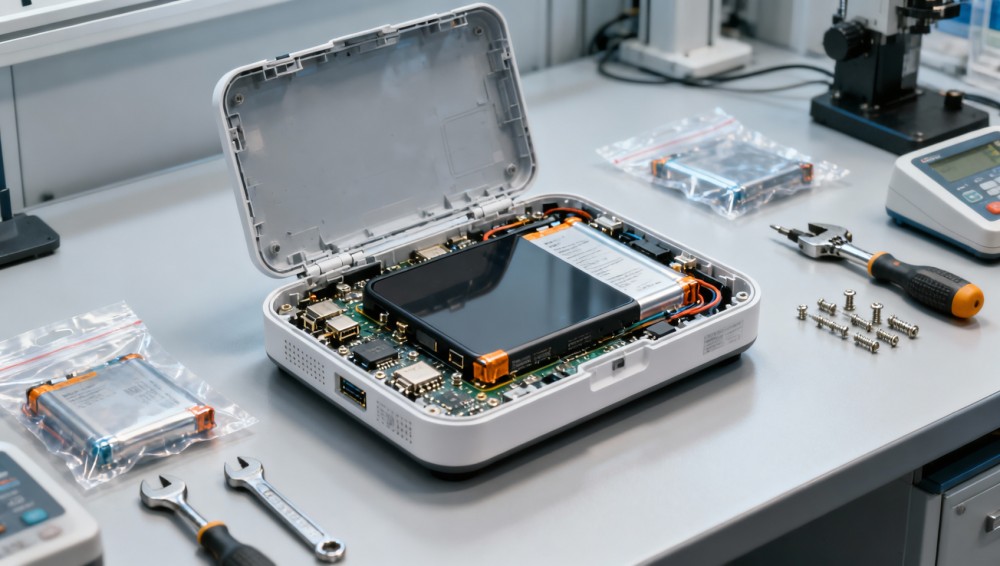
Retailers and distributors face a separate problem: battery compliance can be disrupted after a product has left the factory. Improper repacking, mixed returns, damaged units, counterfeit replacement cells, and poorly documented refurbishment can all create safety and transport risk. A reverse-logistics process that was adequate for wired accessories may not be adequate for devices containing lithium batteries.
Cybersecurity requirements are becoming market-access requirements
Connected consumer devices are increasingly regulated as networked products rather than as standalone hardware. Smart TVs, cameras, speakers, routers, baby monitors, wearables, robotic vacuums, connected appliances, and app-controlled accessories all carry software and communications risks that can affect consumers, retailers, and enterprise networks.
The shift in 2026 is likely to be less about a single global cybersecurity rule and more about the convergence of buyer expectations and regional requirements. The EU Cyber Resilience Act, for example, introduces a phased framework for products with digital elements. Its principal obligations are expected to apply later in the decade, while some reporting-related requirements begin earlier. Businesses preparing 2026 roadmaps should not assume they can wait until the final compliance date. Secure development records, vulnerability-handling processes, software bills of materials, and update ownership need time to establish.
UK product security requirements for consumer connectable products have already sharpened the conversation around default passwords, vulnerability reporting channels, and transparency on security update periods. Other markets are developing their own approaches. The details differ, but the procurement question is becoming standardized: who is accountable for security after shipment, and for how long?
This has direct implications for sourcing. A brand selling an internet-connected device may depend on an original design manufacturer, chipset vendor, cloud provider, app developer, and firmware integrator. If the supply chain cannot identify a vulnerability, issue a patch, and communicate the impact clearly, the brand remains exposed even if it did not write the code itself.
One important distinction is often missed: a device can comply with basic radio, electrical safety, and electromagnetic compatibility requirements while still presenting weak cybersecurity support. A CE mark, FCC authorization, or equivalent market-access documentation should not be treated as proof of a mature post-sale security program.
Privacy and data governance now shape feature decisions
Consumer electronics increasingly collect data that was once associated primarily with online services: voice commands, location signals, household routines, energy usage, health indicators, images, audio, device identifiers, and behavioral data. As a result, data privacy is changing product design decisions, not merely privacy-policy wording.
For manufacturers selling into the EU, GDPR obligations remain relevant wherever personal data is processed. In the United States, state privacy laws continue to create a patchwork that may affect disclosure, consent, access, deletion, and sensitive-data practices. China, Brazil, Canada, and other markets have their own evolving rules and enforcement priorities. A global launch cannot safely assume that one app consent flow or one cloud-hosting arrangement will work everywhere.
The risk is highest where device functions are difficult for consumers to observe or control. Always-on microphones, home cameras, smart displays, child-focused devices, sleep trackers, and connected health-adjacent products deserve especially careful review. Product managers should ask whether each data element is necessary for the stated feature, how long it is retained, where it is transferred, and what remains functional when a user declines optional data sharing.
Business buyers should be equally cautious. A company purchasing smart displays for meeting rooms or wearables for employee wellness programs may inherit privacy responsibilities that were not obvious in a consumer retail setting. The relevant assessment may need to cover administrator controls, account separation, data export, deletion workflows, and whether supplier personnel can remotely access device data.
Sustainability claims need evidence, not just recycled material language
Environmental regulation in consumer electronics is broadening from end-of-life obligations toward substantiated product claims and supply-chain transparency. Extended producer responsibility schemes, waste electrical and electronic equipment obligations, packaging rules, energy efficiency standards, and restrictions on hazardous substances remain important. But in 2026, many businesses will feel greater pressure around what they say about sustainability as well as what they do.
Terms such as “eco-friendly,” “carbon neutral,” “recyclable,” and “made with recycled materials” can be commercially attractive, yet they require disciplined substantiation. The underlying claim may depend on geography, collection infrastructure, material definition, allocation methods, or a narrowly defined product component. A package that is technically recyclable in one market may not be widely processed in another. A product containing recycled plastic may still have limited repairability or a short software-support period.
For procurement professionals, sustainability assessment should therefore move beyond a supplier presentation. Useful questions include whether the claim applies to the full product or a component, whether recycled-content figures are independently supported, how packaging weight is measured, whether repair and refurbishment programs are available, and how returned equipment is handled. Where sustainability is part of a public tender or corporate reporting process, retain the supplier evidence used in the selection decision.
Companies should also watch the interaction between environmental goals and product engineering. Thinner designs, sealed enclosures, high-density batteries, waterproofing, heat management, and low material use can conflict with repairability and component replacement. There is rarely a perfect answer. The stronger commercial position is a documented trade-off supported by test data and a realistic service model.
Product safety scrutiny is expanding to online channels and software-enabled risks
Traditional electrical safety remains non-negotiable, particularly in categories involving charging, heating, high-capacity batteries, power conversion, or child use. Yet product safety enforcement is increasingly focused on the way products reach consumers. Online marketplaces, direct-to-consumer sellers, and cross-border fulfillment models have made it easier for non-compliant devices to enter markets, and regulators are responding with stronger expectations for traceability, responsible economic operators, recall readiness, and online listing controls.
The EU General Product Safety Regulation has reinforced obligations around product safety processes and online sales for consumer products. Its application and related enforcement practices should be reviewed carefully for businesses selling into the EU. Elsewhere, regulators are also paying closer attention to product identification, incident reporting, recalls, and marketplace accountability.
This means a compliant factory test report is not enough on its own. Businesses need to know which legal entity is responsible in the destination market, whether the model identifier matches the sales listing and physical product, whether changes in chargers or bundled accessories affect certification, and whether recall communications can reach customers who bought through third-party channels.
Refurbished products deserve particular attention. Demand for refurbished phones, laptops, game consoles, and smart home devices is growing, but refurbishment can alter compliance risk. Replacing a battery, power adapter, radio module, enclosure, or firmware may change the safety, electromagnetic, privacy, or warranty position. “Refurbished” should not be treated as a single quality grade; purchasers need a clear description of what was replaced, tested, erased, and warranted.
The practical 2026 response is to connect compliance to commercial decisions
The businesses most likely to struggle are not necessarily those with the weakest products. They are often those that handle compliance as a final documentation exercise after design, sourcing, and launch commitments are already fixed. By that point, a requirement for spare parts, a longer update commitment, a battery redesign, or a revised privacy architecture can become expensive and disruptive.
A more useful approach is to build a product-level regulatory map before commercial commitments are finalized. It should identify target markets, product classification, wireless and electrical functions, battery type, personal-data flows, cloud dependencies, software-support owner, packaging route, repair model, and end-of-life responsibility. This is not paperwork for its own sake. It exposes decisions that otherwise remain hidden between engineering, procurement, legal, service, and sales teams.
For buyers, 2026 is also a reason to improve supplier due diligence. Rather than asking only for certificates, request a structured compliance pack that links each product model to its market documentation, update policy, repair terms, battery information, privacy materials, responsible entity, and change-control process. The quality of that response is often more revealing than a supplier’s broad statement that its products are “fully compliant.”
The central policy shift is straightforward: consumer electronics are being judged less as disposable hardware and more as long-lived, connected, resource-intensive products. Businesses that evaluate them through that wider lens will be better positioned to manage risk, compare suppliers, and decide which product features are genuinely sustainable to support.
Policy & Regulations Desk
Related News
- 00
0000-00
What Consumer Electronics Policy Shifts Matter Most in 2026? - 00
0000-00
What the NIS2 directive changes for data security in Europe - 00
0000-00
EU Requires Digital CE Labels for Office Electronics - 00
0000-00
Supply Chain Services Compliance: Key Standards That Reduce Audit Risk - 00
0000-00
EU REACH SVHC Update Triggers August Filing for Office Electronics
Weekly Insights
Stay ahead with our curated technology reports delivered every Monday.