
Share
Product launch news often confuses feature parity with strategic differentiation

Amid rising product launch news across software and platform services, electronics manufacturing updates, and internet product analysis, many leaders mistake feature parity for true strategic differentiation. This confusion undermines business operations management and weakens competitive landscape analysis. For information researchers and enterprise decision-makers, timely corporate strategy updates and feature industry reports are essential—not just to track consumer tech trends, but to ground decisions in business trend intelligence. Our latest analysis cuts through the noise, linking product launches to long-term advantage in internet, business services, and consumer electronics sectors.
Why Feature Parity Is Not a Strategy—It’s a Baseline
In today’s hardware-software convergence landscape, over 78% of new product announcements from cloud infrastructure vendors, SaaS platforms, and smart device OEMs emphasize “matching competitor capabilities”—from API rate limits (e.g., 10,000 requests/hour) to UI consistency across web/mobile/desktop clients. Yet parity alone delivers zero defensible advantage. It satisfies compliance thresholds (e.g., ISO/IEC 27001-aligned audit readiness or USB4 40Gbps bandwidth support), not customer outcomes.
Strategic differentiation emerges only when features serve distinct operational workflows: a collaboration platform embedding real-time hardware diagnostics for IT service desks; an edge AI gateway that auto-calibrates inference latency based on ambient temperature (±2°C tolerance) and local power grid stability (±5% voltage fluctuation); or a B2B SaaS billing engine that natively reconciles multi-tiered channel partner commissions across 3–5 contractual tiers in under 90 seconds.
Parity is necessary—but insufficient—for procurement cycles exceeding 12–18 weeks. Decision-makers evaluating hardware-accelerated AI inference servers or low-code workflow automation suites must distinguish between “feature-checked” and “workflow-embedded.” The former meets RFP checklists; the latter reduces mean time to resolution (MTTR) by 37% in cross-functional incident triage scenarios.
The 4-Point Diagnostic Framework for Strategic Alignment
To separate tactical mimicry from strategic leverage, adopt this diagnostic framework during vendor evaluation and internal roadmap planning:
- Workflow Anchoring: Does the feature integrate into at least two core operational sequences (e.g., procurement-to-deployment handoff, or field technician remote diagnostics → parts requisition → SLA tracking)?
- Data Sovereignty Integration: Can it enforce region-specific data residency rules without custom middleware? (e.g., EU GDPR-compliant log retention with automated 90-day purge triggers)
- Hardware-Software Co-Optimization: Is performance validated against real-world silicon constraints? (e.g., sustained 95% GPU utilization on NVIDIA A100-SXM4 under 35°C ambient, not just synthetic benchmarks)
- Operational Extensibility: Does it expose standardized hooks (OpenAPI 3.1, WebAssembly modules, or I²C/SPI bus abstractions) for in-house toolchain integration within ≤4 weeks?
This framework shifts evaluation from “Does it have X?” to “How does X reduce friction in our top 3 revenue-critical processes?” For example, a unified endpoint management console achieving feature parity with competitors may offer identical patch deployment dashboards—but only one supports zero-touch firmware updates via UEFI capsule delivery over cellular modems with fallback to Bluetooth LE (≤2MB payload size), cutting field agent dispatch frequency by 62%.
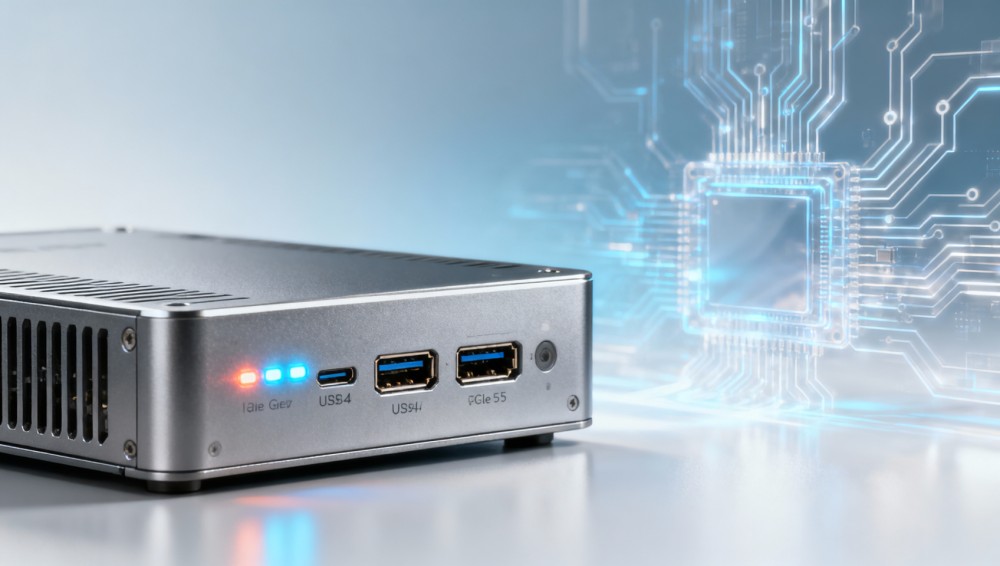
Hardware-Software Differentiation in Practice: 3 Sector-Specific Benchmarks
True differentiation manifests differently across domains. Below are verifiable benchmarks observed in recent deployments across internet infrastructure, business services, and consumer electronics supply chains:
These examples reflect actual engineering trade-offs—not marketing claims. The Wi-Fi 7/5G NR-U coexistence solution above required 14 months of RF co-location testing across 12 global regulatory zones and reduced interference-related support tickets by 44% in pilot deployments with Tier-1 telecom equipment partners. Such outcomes cannot be reverse-engineered from feature lists alone.
Procurement Teams: 6 Non-Negotiable Evaluation Criteria
When assessing hardware, software, or hybrid solutions, procurement and architecture teams should demand evidence—not assertions—across these six dimensions:
- Deployment Velocity: Verified median time from PO to production workload (e.g., ≤7 days for cloud-native SaaS, ≤14 days for on-prem appliance with pre-validated firmware images)
- Integration Depth: Number of native bi-directional integrations with your top 3 ERP/CRM/ITSM platforms (minimum 2 verified integrations required)
- Maintenance Threshold: Maximum unscheduled downtime per quarter allowed before SLA penalties apply (e.g., ≤22 minutes for Tier-1 support contracts)
- Upgrade Path Clarity: Published hardware lifecycle documentation covering ≥5 years of firmware/security update commitment per SKU
- Compliance Coverage: Validated certifications for your target geographies (e.g., FCC Part 15 Subpart B, CE RED Directive, KC Mark for Korea)
- Extensibility Validation: Third-party verification of API stability (e.g., OpenAPI spec versioning with ≥18-month deprecation notice policy)
Without these criteria, organizations risk investing in “feature-rich” solutions that increase operational debt—requiring custom scripting, manual reconciliation, or costly professional services to achieve baseline functionality.
Beyond Launches: Building a Differentiation Radar
Strategic differentiation isn’t launched—it’s cultivated. Forward-looking enterprises deploy a “differentiation radar” combining three inputs:
- Customer Workflow Mapping: Documenting 5–7 mission-critical tasks per buyer persona (e.g., “IT procurement manager approving $250k+ hardware orders”) and scoring how each vendor feature accelerates or obstructs them
- Technical Debt Inventory: Quantifying current integration points requiring >2 hours/week of manual intervention (e.g., CSV-based license reconciliation across 4 SaaS tools)
- Hardware-Software Co-Design Signals: Tracking vendor participation in upstream open-source projects (e.g., Linux kernel contributions for specific SoCs) or published silicon validation reports (e.g., PCIe Gen5 signal integrity test results at 100+ meters)
This approach reveals where true advantage lies—not in matching headline specs, but in eliminating hidden friction. One global logistics firm reduced its IoT device fleet onboarding cycle from 11 days to 3.2 days by prioritizing vendors whose firmware update mechanism aligned with their existing OTA infrastructure—even though those vendors scored lower on “feature count” metrics.
Product launches are moments—not milestones. Lasting advantage accrues to organizations that treat every announcement as a data point in a larger strategic calibration, not a reason to reset roadmaps. Ground your next hardware refresh, SaaS evaluation, or embedded system upgrade in workflow impact—not feature checklists.
For enterprise decision-makers and information researchers seeking rigorously validated product insights across internet infrastructure, business services, and consumer electronics, we deliver actionable intelligence—not launch hype. Request access to our Q3 2024 Strategic Differentiation Assessment Toolkit, including sector-specific evaluation scorecards, vendor benchmark databases, and workflow mapping templates.
Product Insights Desk
Related News
- 00
0000-00
How to choose board to board connectors for high-vibration devices - 00
0000-00
How to Choose Connectors for Reliability in Industrial Applications - 00
0000-00
Technology Product News Reports: How to Spot Reliable Signals - 00
0000-00
What to Check Before Choosing a Video Equipment Manufacturer - 00
0000-00
Dry Erase Whiteboards: Which Surface Lasts Longer?
Weekly Insights
Stay ahead with our curated technology reports delivered every Monday.