
Share
China Customs Launches "Inspect Before Loading" Pilot in Shenzhen

On 2026-04-02, China Customs put a new cross-border e-commerce supervision model into operation at Shenzhen Shenchao Longhua Cross-border Logistics Smart Consolidation Center, which has been designated as the country's first regulatory site for the "inspect before loading" arrangement. Based on the information provided, the change is intended to compress clearance time, improve inspection accuracy, and make outbound shipment timing more certain. It is relevant to B2B and B2C parcel flows as well as overseas warehouse replenishment, so importers, distributors, platform sellers, and logistics operators are likely to pay close attention.
A new customs workflow is now being used in Shenzhen
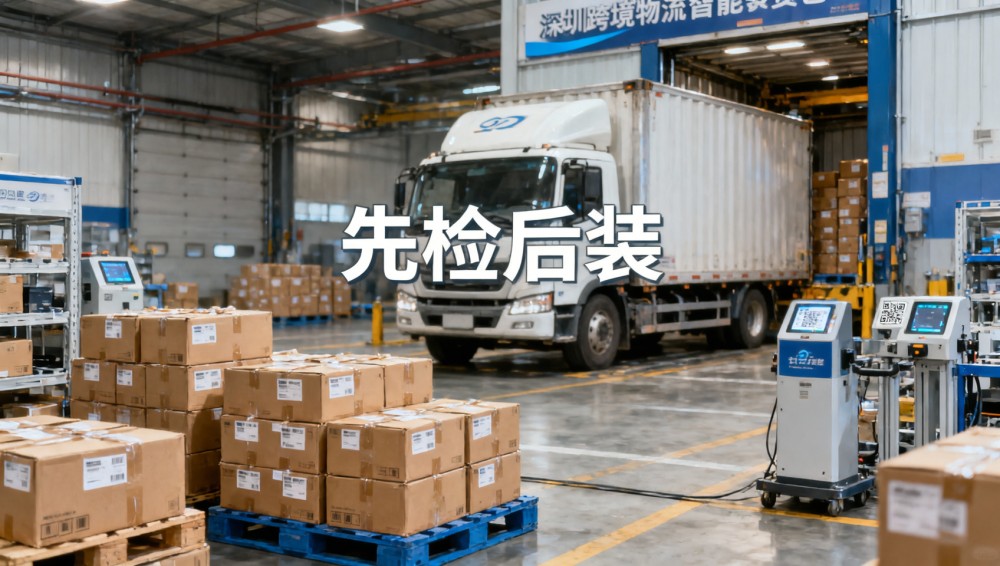
The reported event took place on 2026-04-02, when the Shenzhen Shenchao Longhua Cross-border Logistics Smart Consolidation Center began operating as the first regulatory site in China for the cross-border e-commerce "inspect before loading" model. The model was approved for a pilot by the General Administration of Customs. According to the provided summary, it is aimed at cross-border e-commerce parcels and overseas warehouse stocking scenarios, covering both B2B and B2C shipments.
Where the operational impact is most likely to appear
For platform sellers, shipment timing becomes more predictable
Analysis suggests that sellers using cross-border e-commerce channels may care most about the reduction in uncertainty between inspection and dispatch. If inspection happens before loading, outbound planning can become easier to align with order cutoffs, carrier schedules, and warehouse release plans. What deserves closer attention is whether this creates a more stable rhythm for export fulfillment and lowers the chance of late-stage shipment interruption.
For importers and distributors, rejection risk may be easier to manage
From a trade and compliance perspective, the stated benefit of higher inspection accuracy matters to buyers and distributors that rely on consistent customs clearance outcomes. At this stage, it is more appropriate to understand this as a procedural improvement signal rather than a confirmed universal outcome. Even so, companies handling inbound or cross-border replenishment should watch how document completeness, product classification, and shipment readiness are handled under the new flow.
For logistics and warehouse operators, handoff control becomes more important
Supply chain service providers are likely to feel the most immediate process shift. If goods are checked before loading, the control point moves earlier in the outbound cycle, which may affect sorting, consolidation, staging, and release sequencing. That means operators may need tighter coordination between warehouse records, shipment manifests, and loading decisions to avoid misalignment between inspection status and dispatch execution.
What companies should verify before treating this as a routine process
Check whether current shipment documents match the new clearance logic
Companies should review whether product descriptions, declarations, packing records, and internal shipment data are consistent enough to support pre-loading inspection. The provided information does not specify detailed filing requirements, so this should be treated as a verification task rather than a fixed compliance checklist.
Reassess delivery plans for B2B, B2C, and overseas warehouse replenishment
Because the model is said to apply to full-scale cross-border parcels and overseas warehouse stocking, firms should examine which routes, SKUs, or fulfillment flows are most sensitive to dispatch timing. The key question is not only whether clearance is faster, but whether that speed can be translated into more reliable inventory turnover and lower delivery variance.
Watch for follow-up execution details and local implementation cues
The current information points to a pilot going live, but not to every operational rule around it. Companies should keep watching for official follow-up statements, implementation language, and on-the-ground handling details that may affect how the model is applied in practice.
How this should be read today
In our view, this is best understood as an execution signal rather than a finished end-state for the market. The important point is that customs supervision is shifting toward an earlier inspection checkpoint, which may improve shipment certainty if the process works as intended. For now, the practical response is to monitor how the pilot is executed, which cargo flows are actually covered, and whether the operational gains described in the announcement hold up in day-to-day use.
What this report is based on
This article is generated from the user-provided headline, event date, and event summary only. No specific official document link was provided in the input. For a full compliance readout, relevant source types would normally include customs authority notices, regulatory announcements, trade supervision guidance, and industry reporting. Further verification should continue on policy details, execution scope, shipment handling practice, and feedback from participating businesses.
Cross-Border E-Commerce Editorial Team
Related News
- 00
0000-00
China Customs Launches "Inspect Before Loading" Pilot in Shenzhen - 00
0000-00
How to Compare an Online Store Builder Supplier on Pricing, Integrations, and Scalability - 00
0000-00
Lazada, Shopee Mandate GB/T 35273-2023 Privacy Notices - 00
0000-00
E Commerce Operations: Fixing Fulfillment Delays Across Sales Channels - 00
0000-00
Shenzhen Port Opens Fast Lane for Certified Office Exporters
Weekly Insights
Stay ahead with our curated technology reports delivered every Monday.