

A Customer Service Software Feature Comparison for Growing Support Teams
For growing consumer electronics support teams, selecting the right platform requires more than comparing ticket volumes and pricing tiers.
This customer service software feature comparison examines omnichannel support, automation, knowledge management, integrations, analytics, and scalability for technical evaluators.
The strongest choice is usually the platform that preserves reliable customer context while connecting product data, service workflows, and reporting systems.
Teams should evaluate operational fit before feature breadth, because unused functionality does not reduce resolution time or improve the ownership experience.
Start With Support Complexity, Not a Generic Feature Checklist
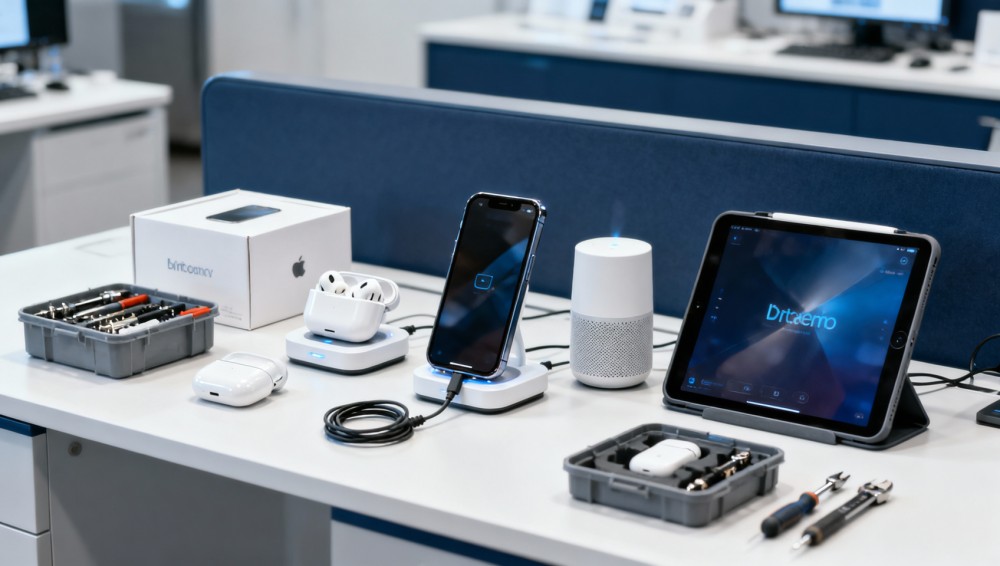
Consumer electronics support has unusual requirements because customers often need help with setup, compatibility, firmware, warranty coverage, repairs, and replacement decisions.
A basic ticketing platform may capture questions efficiently, yet still fail when agents must inspect serial numbers, purchase dates, device status, or diagnostic results.
Technical evaluators should first map the service journey from product registration through post-purchase troubleshooting, repair escalation, and eventual replacement or upgrade.
This process reveals whether the software must support simple inquiries, complex cases, asynchronous diagnostics, partner coordination, or regulated customer data handling.
Feature comparisons become more useful when every capability is tied to a documented workflow, service-level target, system dependency, and measurable customer outcome.
For example, a Bluetooth pairing issue may begin in chat, continue through email, require diagnostic attachments, and end with a replacement authorization.
The chosen platform should preserve the entire case history across those steps without forcing agents or customers to repeat information repeatedly.
Technical teams should also separate essential capabilities from attractive extras, especially when vendors package advanced features inside higher-priced enterprise plans.
Essential capabilities directly affect service continuity, integrations, security, and reporting accuracy, while optional features may improve experience after core operations stabilize.
A practical evaluation starts by assigning priority levels to requirements: mandatory, important, useful, and unsuitable for the organization’s current operating model.
Compare Omnichannel Support by Context Continuity
Omnichannel support should mean more than offering email, chat, phone, social messaging, and web forms through a single dashboard.
The critical question is whether the platform links conversations, customer identity, product ownership, and previous actions across every supported communication channel.
Customers commonly move channels when troubleshooting a device, particularly when chat cannot accommodate lengthy diagnostics, images, videos, or serial-number verification.
Agents need a unified timeline showing prior conversations, orders, warranties, returns, and knowledge articles viewed before a case reaches the queue.
Without shared context, channel expansion can increase operating costs because customers restart conversations and agents spend more time collecting basic information.
Evaluate identity matching carefully. The system should merge records responsibly while avoiding accidental account consolidation between household members or business contacts.
Phone support deserves specific attention because screen-pop capabilities, call recording controls, callback management, and transfer history vary considerably among vendors.
For chat and messaging, assess attachment limits, bot-to-agent handoffs, transcript retention, language support, and the ability to continue conversations asynchronously.
Teams supporting retailers, installers, or distributors should verify whether partner communications can be separated from consumer conversations while retaining linked case visibility.
The best omnichannel configuration reduces customer effort without requiring every available channel to launch at once, especially during early implementation stages.
Test Automation Against Real Service Decisions
Automation can improve speed, but weakly designed rules often create incorrect routing, confusing replies, duplicate tickets, and difficult exception handling.
During a customer service software feature comparison, technical evaluators should inspect rule logic, trigger options, condition depth, execution order, and audit visibility.
Useful automation begins with low-risk tasks such as acknowledgement emails, language-based routing, duplicate detection, priority tagging, and status notifications.
More advanced workflows can classify issue types, request missing details, assign specialists, calculate warranty eligibility, or escalate urgent safety-related product reports.
However, automation should not automatically close complex technical cases simply because a customer has not replied within a standard time window.
Consumer electronics cases frequently pause while customers test instructions, locate proof of purchase, install updates, or wait for access to the affected device.
Assess whether workflow rules can account for business hours, regional holidays, product categories, customer tiers, and pending actions from repair partners.
Agents also need clear visibility into why an automated action occurred, including the rule name, timestamp, prior values, and available override options.
AI-assisted capabilities require the same scrutiny. Summaries, suggested replies, intent classification, and translation should be evaluated using representative support transcripts.
Measure accuracy by issue category, not only overall performance, because errors involving safety notices, warranty terms, or repair instructions carry greater business risk.
Evaluate Knowledge Management as a Resolution System
Knowledge management is often treated as a publishing feature, but growing support teams need it to function as a controlled resolution system.
Customers should find accurate setup guides, compatibility information, troubleshooting steps, warranty policies, and firmware instructions before contacting an agent.
Agents need internal articles that include escalation criteria, repair procedures, exception policies, approved language, and product-specific diagnostic decision trees.
Compare authoring workflows, version control, approval stages, review reminders, article ownership, localization support, and permissions for restricted internal content.
For electronics brands, article structure should support product families, model variations, operating systems, regional accessories, and differences between hardware revisions.
A search function that only matches exact phrases will frustrate customers who describe symptoms differently from product documentation or engineering teams.
Test search with realistic language, including incomplete descriptions such as “speaker keeps cutting out” or “screen does not wake after charging.”
Strong platforms connect articles to tickets, allowing teams to measure whether specific content reduces contacts, speeds handling, or leads to repeat follow-up requests.
Evaluators should also check whether agents can suggest article improvements directly from a case, rather than relying on separate editorial processes.
Knowledge quality should be reviewed jointly by support, product, engineering, legal, and compliance stakeholders when instructions affect warranties or customer safety.
Verify Integrations Beyond the Marketplace Listing
Integration depth often determines whether service software becomes a central operating platform or another isolated interface for support agents.
Marketplace listings are not sufficient evidence. Technical evaluators should validate data objects, synchronization frequency, API limits, failure handling, and ownership boundaries.
Most consumer electronics support teams need connections to ecommerce platforms, CRM systems, order management tools, warranty databases, logistics providers, and repair systems.
Some organizations also require product registration services, device telemetry platforms, identity providers, payment systems, enterprise resource planning, and business intelligence tools.
The platform should retrieve relevant information without exposing unnecessary personal data or requiring agents to switch among multiple browser tabs.
Ask whether integrations support read-only context, write-back actions, event-driven updates, bulk synchronization, and reliable recovery after failed transactions.
For warranty and repair workflows, confirm that agents can initiate authorized actions from the service interface while preserving an auditable transaction history.
API documentation should be reviewed early. Look for authentication methods, webhook coverage, rate limits, sandbox access, versioning policies, and deprecation commitments.
Low-code connectors can accelerate deployment, but custom integration requirements should be estimated honestly before selecting a platform based on connector availability.
A vendor’s professional services team may help initially, yet internal teams need maintainable documentation and ownership after implementation support ends.
Use Analytics to Measure Service Quality and Product Signals
Reporting should help leaders improve service operations and identify recurring product issues, not merely display ticket totals and agent activity metrics.
Core service measures include first response time, resolution time, backlog age, reopen rate, transfer rate, customer satisfaction, and adherence to service targets.
For technical evaluators, the deeper question is whether reports can segment those measures by product model, firmware version, issue category, channel, region, and customer type.
That segmentation can reveal whether a sudden contact increase reflects a service staffing problem, a confusing instruction, a defective component, or a software release.
Evaluate reporting flexibility by asking whether teams can define custom fields, create calculated metrics, schedule reports, and export clean data into existing analytics environments.
Prebuilt dashboards are useful for supervisors, but product and engineering teams often need raw event-level data to investigate emerging patterns properly.
Data governance matters here. Reports should distinguish contact reasons from confirmed defects and prevent early assumptions from becoming misleading product quality conclusions.
Look for mechanisms that preserve historical reporting when fields, workflows, team structures, or service categories change over time.
Real-time dashboards can support queue management, but historical trend analysis is more valuable when deciding staffing levels, product changes, and self-service investments.
A capable analytics layer turns customer support into a feedback source for product development, retail operations, documentation strategy, and lifecycle planning.
Assess Scalability Through Administration, Security, and Reliability
Scalability is not simply a promise to handle more tickets. It includes administrative control, performance consistency, permissions, compliance, and predictable operating costs.
Growing teams need role-based access that distinguishes frontline agents, supervisors, knowledge authors, analysts, administrators, outsourced partners, and engineering users.
Review whether permissions can limit access to sensitive customer information, financial records, repair data, internal notes, and administrative configuration settings.
Single sign-on, multi-factor authentication, audit logs, retention controls, encryption details, and regional data residency requirements should be reviewed with security stakeholders.
For organizations using outsourced support, verify whether external agents can access assigned queues without viewing unrelated brands, regions, or high-value customer accounts.
Platform reliability should be assessed through service-level commitments, incident communication practices, disaster recovery documentation, status history, and support escalation procedures.
Commercial scalability also matters. Model the costs of additional agents, channels, AI usage, storage, premium integrations, reporting, and implementation support.
Some platforms appear economical during a pilot but become expensive when advanced routing, sandbox environments, or enterprise security controls are required later.
Administrators should test common configuration tasks, including creating fields, changing forms, revising routing rules, managing user access, and deploying workflow updates.
If routine changes require vendor consultants or engineering releases, the platform may slow operations as service volume and product complexity increase.
Run a Proof of Concept Before Making the Final Selection
A structured proof of concept provides stronger evidence than demonstrations, because it tests the vendor’s claims against actual cases and organizational constraints.
Select representative scenarios such as failed device activation, return eligibility, firmware troubleshooting, damaged shipment claims, and complex repair coordination.
Include both straightforward and difficult cases, since software weaknesses are usually visible when customer history, integrations, exceptions, and handoffs become involved.
Define success measures before testing. Useful measures include agent effort, data completeness, workflow reliability, integration latency, report accuracy, and administrator effort.
Invite frontline agents, support operations leaders, security specialists, integration engineers, product teams, and procurement stakeholders to score the results independently.
Use a weighted scorecard, but do not allow a high number of low-value features to offset failure in mandatory requirements.
Document gaps with evidence, including screenshots, test results, vendor responses, estimated remediation effort, and the likely operational impact after rollout.
Technical evaluators should also ask vendors to explain product roadmap dependencies instead of treating planned functionality as currently available capability.
Final selection should consider implementation readiness, internal ownership, migration complexity, contractual protections, and the vendor’s ability to support future operating models.
The right platform is the one that can be adopted reliably by agents, governed effectively by administrators, and extended without excessive technical debt.
Conclusion: Choose the Platform That Supports Better Decisions
A meaningful customer service software feature comparison should focus on operational evidence, rather than broad claims about omnichannel coverage, automation, or artificial intelligence.
For growing consumer electronics support teams, context continuity, trustworthy integrations, controlled knowledge, actionable analytics, and secure administration deserve the highest priority.
These capabilities reduce repeated customer effort while helping agents resolve technically complex cases with consistent information, documented decisions, and appropriate escalation paths.
Feature breadth matters only when the platform can connect service activity to product ownership, warranty workflows, repair operations, and reliable organizational data.
Technical evaluators should use realistic proof-of-concept scenarios to identify configuration limits before committing budgets, migration resources, and long-term operational dependencies.
Ultimately, the best solution enables support teams to scale service quality alongside demand, while producing clearer insights for product, operations, and customer experience leaders.