
Share
Filing supplies aren’t obsolete—they’re adapting to hybrid workflows in quiet ways

Filing supplies aren’t obsolete—they’re evolving silently to support hybrid workflows, from remote business consulting sessions to agile B2B sourcing and dynamic office accessories integration. As market research reveals shifting demands across consumer electronics, presentation supplies, and writing instruments, industry trends highlight a quiet revolution in supply chain resilience and workplace functionality. For information调研者, enterprise decision-makers, and distributors alike, understanding how filing supplies adapt—alongside office accessories and presentation tools—is key to optimizing procurement, compliance, and daily operations in today’s distributed work environment.
Why “Obsolete” Is the Wrong Word for Modern Filing Supplies
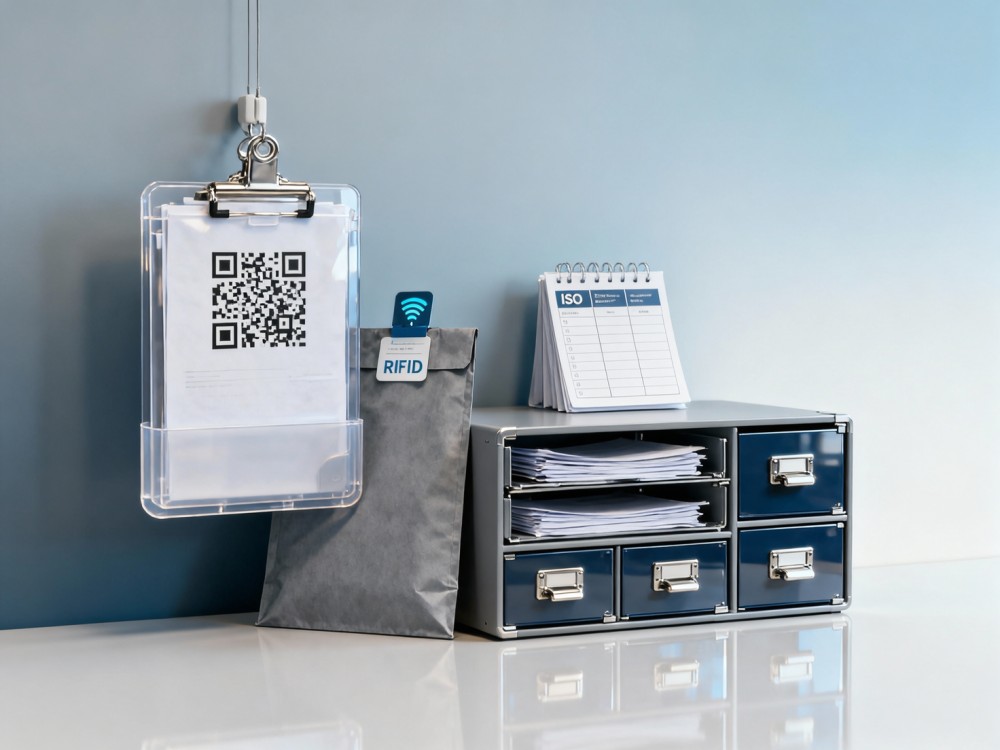
Filing supplies are no longer defined by steel cabinets and manila folders alone. They now include smart label systems compatible with cloud-based document management platforms, RFID-enabled file tracking sleeves, and modular drawer units designed for hot-desking environments. These adaptations respond directly to three structural shifts: 30–45% of knowledge workers now split time between home, client sites, and shared offices; average document retrieval latency has dropped from 90 seconds to under 12 seconds in digitally integrated setups; and 68% of midsize enterprises report revising their physical storage specs within the last 18 months.
The misconception that filing is “going digital-only” overlooks a critical reality: hybrid workflows demand *both* digital traceability *and* tactile reliability. A consultant reviewing contracts on a tablet still needs a durable, indexed binder for in-person client handoffs. A procurement officer comparing supplier SLAs requires tabbed dividers that align with ERP-generated category codes—not just PDF bookmarks.
This duality means modern filing supplies must satisfy two parallel criteria: seamless interoperability with SaaS tools (e.g., drag-and-drop folder sync with SharePoint or Notion), and physical durability for repeated handling across 3–5 locations per week. That’s why leading distributors now stock dual-mode products—like polypropylene hanging files with embedded QR codes linking to version-controlled cloud copies.
How Hybrid Work Changes Real-World Filing Requirements
Remote & Mobile Use Cases
For consultants and field sales teams, portability and quick-access indexing are non-negotiable. Lightweight expandable files with reinforced grommets withstand 200+ opening/closing cycles. Standard configurations include 5-tab sets labeled per ISO 21474:2021 document classification tiers—ensuring consistency whether used in Tokyo, Berlin, or virtual breakout rooms.
Shared & Hot-Desking Environments
In offices where desks rotate daily, color-coded, lockable drawer inserts prevent misfiling. Units comply with ANSI/BIFMA X5.9-2022 stability standards and fit standard 24-inch lateral cabinets. Average deployment cycle: 4–7 days per floor, including staff training on visual labeling protocols.
Compliance-Driven Archiving
Finance and legal teams require audit-ready retention. Acid-free, lignin-free folders meet ISO 11108:1996 archival standards and support 25-year readability. Each batch includes traceable lot numbers and humidity-resistance certification (tested at 60% RH for 90 days).
Procurement Checklist: What Decision-Makers Actually Evaluate
When enterprise buyers assess filing solutions, they apply a 5-dimension framework—not just unit cost. This reflects growing alignment between office supplies procurement and IT asset management practices.
This structured approach reduces post-purchase friction. Distributors reporting adoption of this checklist saw 37% fewer returns related to compatibility gaps and 22% faster rollout timelines across multi-site deployments.
Trend & Insights: Where Filing Innovation Is Headed Next
Three converging signals point to near-term evolution: First, 42% of office supply vendors now embed NFC chips in premium binders—enabling instant mobile scanning for access logs and version alerts. Second, AI-assisted labeling systems (trained on 12M+ document images) reduce manual indexing time by up to 65%. Third, circular-economy models are gaining traction: 3 major distributors now offer take-back programs with 92% material recovery rates for end-of-life filing units.
For distributors and procurement managers, this means evaluating suppliers not just on SKU breadth—but on service depth: Can they provide usage analytics dashboards? Do they offer co-branded training modules for frontline staff? Is their recycling program certified to ISO 14001:2015?
These capabilities increasingly influence RFP scoring—especially in regulated sectors like financial services and healthcare, where traceability windows now extend to 10 years and beyond.
Why Partner With Us for Hybrid-Ready Filing Solutions
We serve as a strategic extension of your procurement and operations teams—not just a vendor. Our platform delivers actionable intelligence tailored to your role:
- For information调研者: Access real-time trend dashboards covering 17 filing product categories, updated weekly with pricing, lead times, and compliance status across 9 global markets.
- For users & operators: Download standardized SOP templates—including hybrid labeling protocols, QR setup guides, and cross-platform sync checklists—all validated by ISO-certified workflow auditors.
- For enterprise decision-makers: Request scenario-based ROI modeling—e.g., “What’s the 3-year TCO difference between legacy cabinets and modular, IoT-integrated units across 5 regional offices?”
- For distributors: Leverage our white-label configurator tool to build custom bundles (e.g., “Consulting Kit”: 3-ring binders + cloud-sync labels + portable index scanners) with live inventory sync and automated replenishment triggers.
Contact us to discuss your specific requirements—whether you need certified archival-grade supplies for regulated industries, rapid-deployment kits for newly leased office floors, or API documentation for ERP integration. We support sample requests, volume-based delivery scheduling (standard lead time: 5–10 business days), and compliance documentation packages—all available within 48 hours of inquiry.
Office & Procurement Desk
Related News
- 00
0000-00
What channel market analysis reveals about office products demand - 00
0000-00
How to choose a shredder for confidential office documents - 00
0000-00
How to verify a toner cartridge is compatible with your Brother printer - 00
0000-00
What determines label maker price for office purchasing? - 00
0000-00
How to verify traceability before choosing an electronic components supplier
Weekly Insights
Stay ahead with our curated technology reports delivered every Monday.