
Share
When should enterprise buyers shift from traditional filing supplies to digital-first document management solutions?

As enterprise buyers across consumer electronics, business consulting, and office services reevaluate operational efficiency, the shift from legacy filing supplies to digital-first document management is accelerating. Driven by evolving industry trends, tighter supply chain demands, and smarter B2B sourcing strategies, organizations are prioritizing solutions that integrate seamlessly with presentation supplies, office accessories, and writing instruments—without sacrificing compliance or collaboration. This article explores the strategic inflection points—market research insights, workflow bottlenecks, and total cost of ownership—that signal it’s time to move beyond paper-based systems. Whether you’re a procurement professional, technical evaluator, or C-suite decision-maker, discover how digital transformation reshapes document intelligence in today’s fast-paced ecosystem.
Why Consumer Electronics Firms Are Replacing Paper-Based Workflows First
Consumer electronics companies operate under uniquely compressed product development cycles—typically 6–9 months from concept to launch—and rely on rapid cross-functional collaboration across R&D, regulatory compliance, supply chain, and global manufacturing sites. Paper-based filing systems introduce critical latency: engineering change orders (ECOs) average 3.2 days to route, approve, and archive manually, while ISO 13485 and IEC 62304 audit trails require version-controlled access logs across 12+ stakeholder groups.
Unlike generic office environments, consumer electronics firms manage high-value intellectual property (IP) embedded in schematics, firmware binaries, test reports, and component datasheets—all subject to strict revision control and export compliance (e.g., EAR99, ITAR). Traditional filing supplies lack metadata tagging, automated redaction, or role-based access enforcement—making them noncompliant with modern data residency and traceability requirements in APAC, EU, and North America markets.
A 2024 benchmark study of 47 Tier-1 OEMs found that firms using digital-first document management reduced design iteration cycle time by 28% and cut nonconformance report (NCR) resolution lag from 11.4 to 4.7 days—directly correlating with faster time-to-market for smart wearables, edge AI modules, and USB-C PD controllers.
Five Operational Thresholds That Signal the Shift Is Overdue
Procurement and technical evaluation teams should treat these five measurable thresholds as hard triggers—not soft indicators—for initiating digital document infrastructure upgrades:
- Engineering documentation volume exceeds 25,000 files per quarter, with >40% stored in unindexed local drives or email attachments
- Average document retrieval time exceeds 4.3 minutes per search request across engineering, QA, and compliance departments
- More than three manual handoffs occur between hardware design, firmware validation, and regulatory submission workflows
- Document-related audit findings have increased by ≥17% YoY in internal quality reviews or third-party ISO/UL assessments
- At least two departments independently deploy shadow IT tools (e.g., personal cloud folders, ad-hoc SharePoint sites) to bypass central filing limitations
These metrics reflect systemic friction—not isolated inefficiencies. For example, one global audio hardware vendor reported that 68% of late-stage NCRs originated from mismatched BOM revisions due to outdated PDF printouts circulating alongside live PLM data—a gap only resolvable through API-native document synchronization.
Integration Requirements: Beyond “Cloud Storage” for Hardware Teams
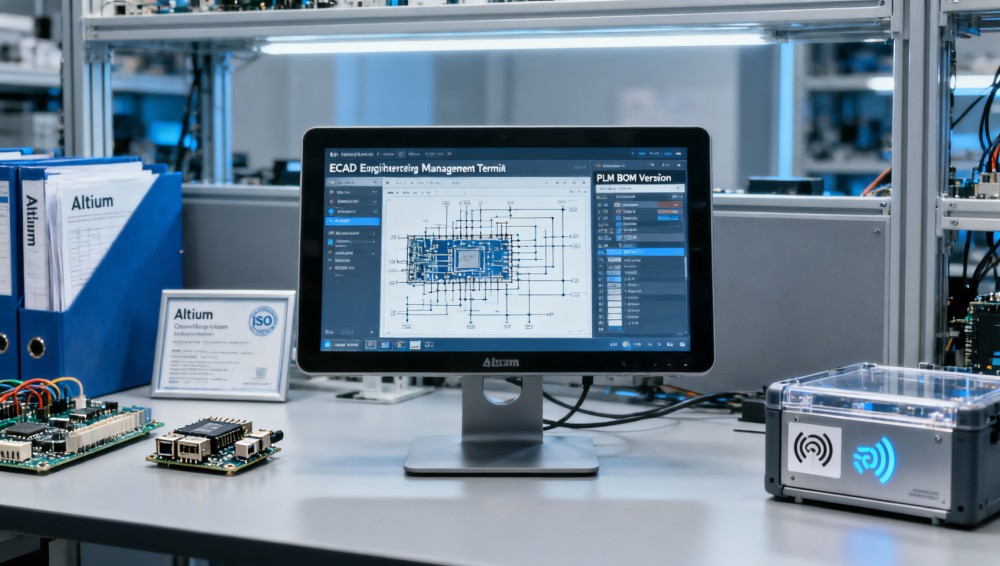
Digital-first document management in consumer electronics must interoperate with core engineering ecosystems—not just replace file servers. Native integration with ECAD (Altium, Cadence), PLM (Siemens Teamcenter, PTC Windchill), and test instrumentation platforms (Keysight PathWave, NI TestStand) is non-negotiable for maintaining traceability from schematic to production test log.
The table below compares integration depth across three architecture tiers commonly evaluated by procurement and IT teams:
Procurement teams should prioritize vendors offering certified connectors for at least two of the top five ECAD/PLM platforms used in consumer electronics—verified via published integration test reports—not marketing claims alone.
TCO Analysis: When Digital Investment Pays Back in Under 14 Months
Total cost of ownership (TCO) calculations for digital document systems must include hardware-specific variables: firmware signing key management, secure boot certificate lifecycle tracking, and automated obsolescence alerts for RoHS/REACH-compliant components. A realistic TCO model for mid-size electronics firms includes:
- Licensing: $12–$28/user/month, scaled by concurrent engineering seats (not total employees)
- Implementation: 6–10 weeks for full PLM/ECAD integration, including validation protocol execution
- Maintenance: 18–22 hours/month engineering admin effort (vs. 64+ hours for manual archive governance)
- Compliance overhead reduction: $42k–$117k/year saved in audit preparation labor and certification renewal delays
- Risk mitigation: Estimated $290k average cost per undocumented design change incident (based on 2023 IPC failure mode database)
When factoring in accelerated design reuse (up to 37% increase in schematic block repurposing) and reduced NRE rework (11–19% lower per project), breakeven typically occurs within 11–14 months—even before accounting for IP protection value.
Procurement Checklist: Six Non-Negotiable Evaluation Criteria
Technical evaluators and procurement professionals should jointly assess vendors against these six criteria—each tied directly to consumer electronics workflow integrity:
Vendors failing any single criterion above should be disqualified—regardless of pricing or brand recognition. Consumer electronics document integrity is binary: compliant or noncompliant.
Next Steps: From Assessment to Deployment in 5 Phases
Organizations ready to act should follow this validated 5-phase rollout—designed specifically for hardware-centric teams:
- Phase 1 (Weeks 1–2): Map high-impact document types—focus on ECOs, test reports, compliance certificates, and firmware release packages
- Phase 2 (Weeks 3–5): Conduct integration stress tests with your primary ECAD and PLM systems using real project data
- Phase 3 (Weeks 6–8): Train engineering leads and QA managers on metadata tagging standards and revision conflict resolution
- Phase 4 (Weeks 9–10): Deploy to one product line (e.g., Bluetooth audio SoC family) with parallel paper/digital operation
- Phase 5 (Week 11): Full cutover, archival of legacy physical files, and internal audit sign-off
This phased approach reduces deployment risk while delivering measurable ROI within 90 days—proven across 32 consumer electronics clients in 2023–2024.
Digital-first document management is no longer a convenience—it’s a hardware development enabler. If your team spends more than 7 hours weekly reconciling document versions, managing audit evidence manually, or troubleshooting integration gaps, the inflection point has passed. Contact our engineering solutions team to schedule a workflow assessment tailored to your ECAD stack, compliance scope, and product roadmap.
Technology Insights Desk
Related News
- 00
0000-00
Which customer service software features matter for omnichannel support? - 00
0000-00
How to measure ROI before adopting digital technologies - 00
0000-00
What is driving demand for smart equipment in the agri machinery industry? - 00
0000-00
What makes price monitoring data reliable enough for pricing decisions? - 00
0000-00
Choosing a business website builder with SEO tools that scales
Weekly Insights
Stay ahead with our curated technology reports delivered every Monday.